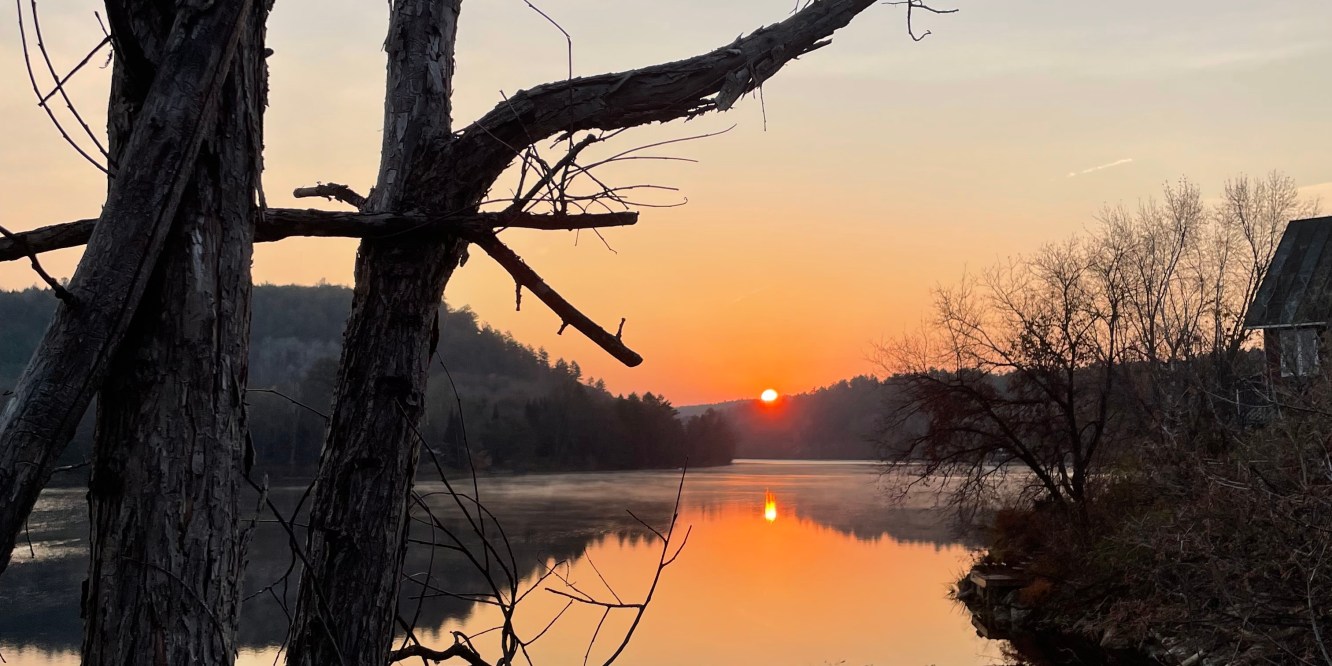
Wandering Away
As I press “publish” to send this blog post out into the ether, I’m packing my bags for my next adventure.
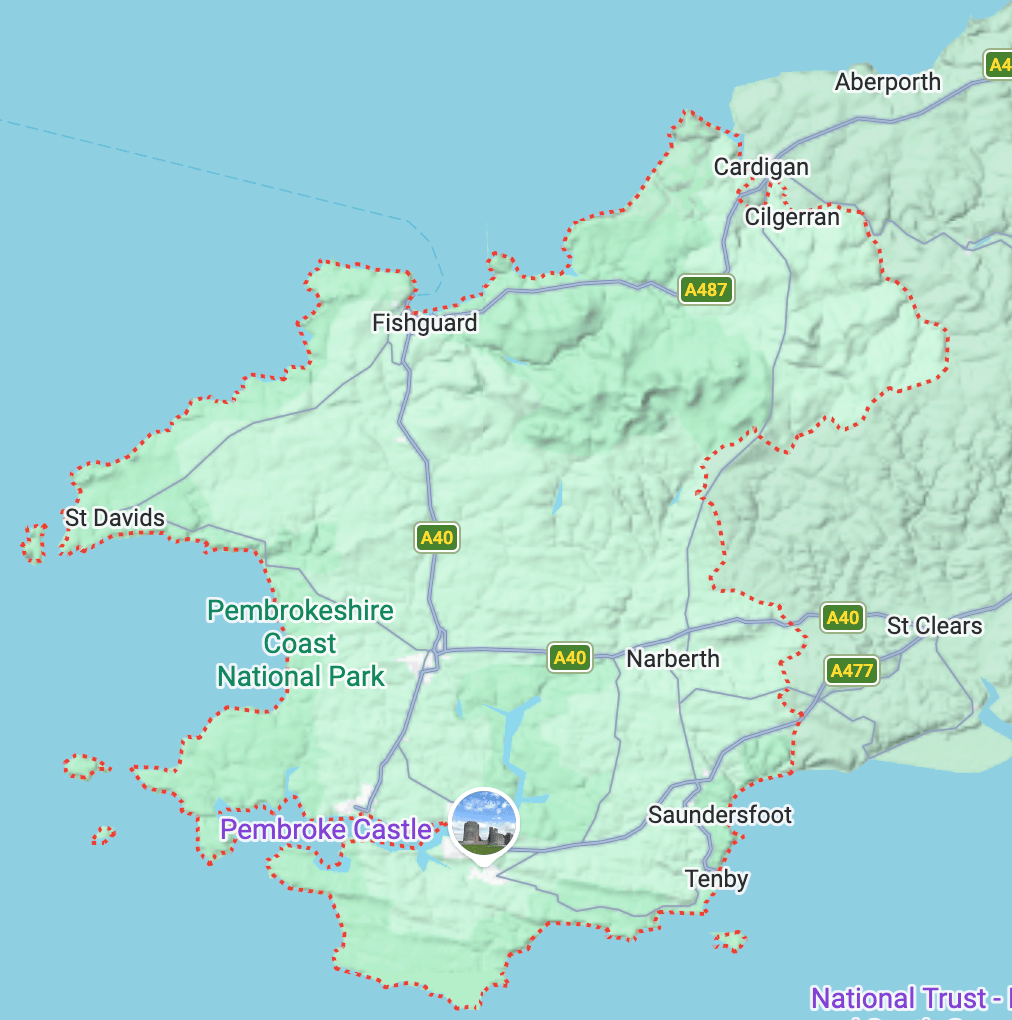
I’m going home for a few weeks. Home: home to London (my first home away from my family, and where I met my husband), to see my granddaughters, and home to a place where I spent many childhood summer holidays. You could call it a pilgrimage of sorts. Going back to a place that I once knew so well.
I’ve been thinking about the need to travel, “to get away”, and I’ve been wondering whether in travelling we look to escape ourselves, or whether we look to find ourselves when everything familiar falls away.
And the answer is, I don’t know.
Living among the Gatineau hills, I am blessed to spend my days in such a beautiful, peaceful part of the world. And I ask myself, why would I ever want to wander away?
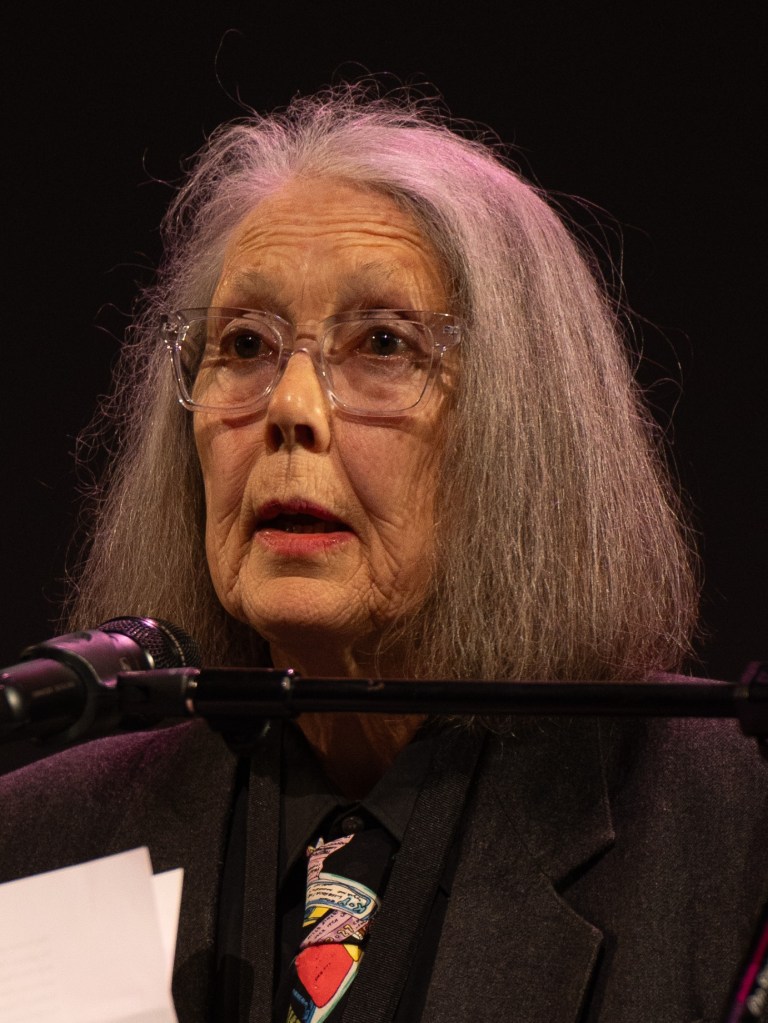
For the past few weeks, my social media feed has been full of Anne Carson. Maybe not yours? Maybe you’re not as interested in poetry-obsessed as me! Anne Carson has just been awarded the Nobel Prize in Literature for her body of work, mainly poetry. She is a formidable classics scholar. I regret that because she wove Greek mythology and other classical texts into her work, I ignored her. Maybe the young me thought it pretentious; more likely I was afraid that because I didn’t study the classics, I wouldn’t understand her work. Now though, I realise that even without any attempt at book-learning, those mythologies lie buried deep within my DNA, resurfacing in present forms. A strong connection to ancestors.
Maybe we wander to rediscover those ancestral connections?
A few social media posts mentioned Carson’s interest in detail. In an interview following her award she said: “The task of a writer is to notice small things. Noticing large things is for people like Descartes”. And it made me think of a poem I first heard nearly forty years ago, back in the UK, in the Leicester library. Simon Armitage is now the UK’s Poet Laureate, but back then he was “but a lad”, with a mop of floppy hair, and his first poetry collection Zoom
His poem, It Ain’t What You Do, It’s What It Does To You contrasts those grand experiences that are generally only to be had by travelling, with the small details of “real life”
I have not bummed across America
with only a dollar to spare, one pair
of busted Levi’s and a bowie knife.
I have lived with thieves in Manchester.
And I go back to my student days when I lived in a damp cottage in the middle of a field next to the nicest family of villains you could wish to have as neighbours. You had to watch out, of course. Things would go missing, like the stereo system. All it took was a knock on their door to ask if we could have it back. My Mini Cooper often went for a joyride without me. I didn’t leave the keys in the ignition. Our neighbours were masters of hot wiring. Maybe I wasn’t tuned in to noticing back then. I certainly had no idea that no fewer than 27 Ford Cortinas were hidden around the adjacent farm: under hay bales, behind old farm machinery, in the drainage ditches. Our neighbours were arrested in a police raid early one misty morning, and life became peaceful. No more “Tell me why I don’t like Mondays” blasted through the stone wall on our stereo.
Unlike many of my student friends, I didn’t go hitchhiking across Europe and beyond after graduate studies. Instead, I went straight from those farm days to working in a big city. So, like Simon Armitage
I have not padded through the Taj Mahal
barefoot, listening to the space between
each footfall picking up and putting down
its print against the marble floor.
Years later, I travelled quite a bit for work, but my focus was always on the work. With a family back home, I rarely allowed myself an extra day or so to visit the sights. Do I regret that now? Sometimes, maybe, but I was never really interested in playing tourist; preferring to disappear into whichever landscape I find myself in.
Rather, I identify with Armitage’s description of skipping stones across a lake.
....................But I
skimmed flat stones across Black Moss on a day
so still I could hear each set of ripples
as they crossed. I felt each stone’s inertia
spend itself against the water; then sink.
My Dad taught me the knack of skipping stones across water. Generally, sending them out into the Atlantic, trying to time throws between the waves, to get the maximum number of skips. Later, I watched my husband teach our son. Now we stand patiently watching our grandson throw stone after stone into the creek, or watch sticks and leaves travel under a small bridge.
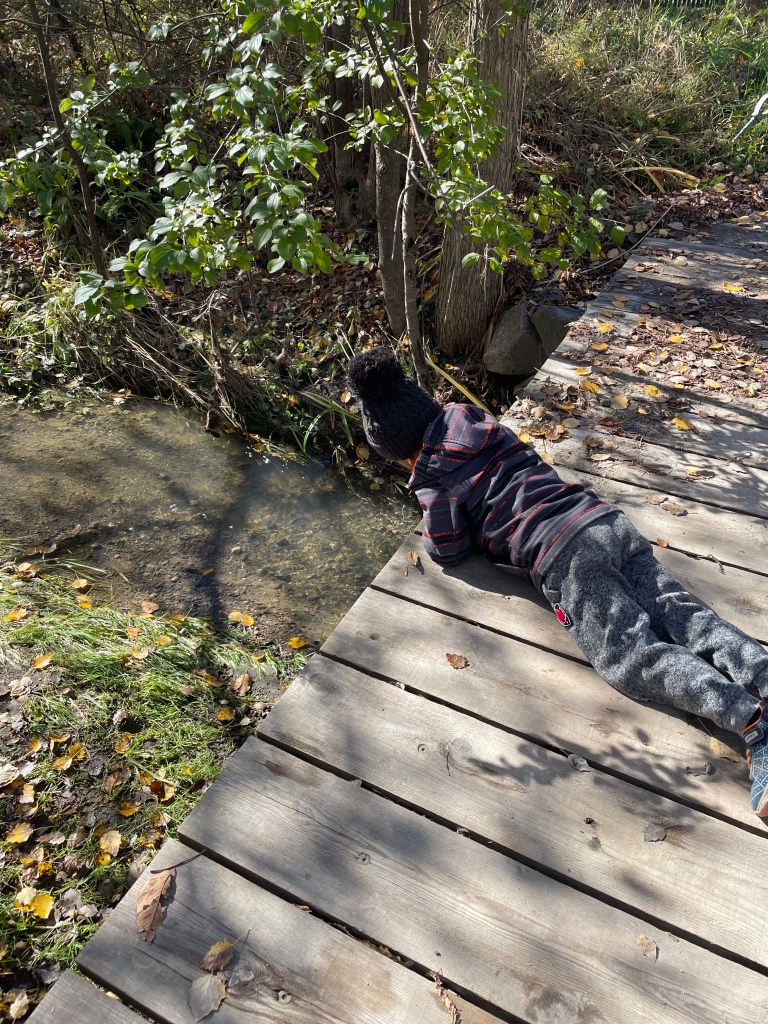
Once, flying home from a work assignment, I flipped through one of those Air Canada magazines lodged in the seat pocket in front of me. There was an article about extreme sports. The author claimed that only by jumping from an aircraft, or paragliding, or skiing down a double black diamond in the Alps could you feel truly alive. I beg to differ. I can scare myself quite adequately sitting at my desk with my pen in my hand. My mind does not need my body to travel.
As Armitage writes,
I have not toyed with a parachute cord
while perched on the lip of a light aircraft,
but I held the wobbly head of a boy
at the day centre, and stroked his fat hands
and it’s in those quiet moments that I think we find what is real. Or as the poem says
And I guess that the tightness in the throat
and the tiny cascading sensation
somewhere inside us are both part of that
sense of something else. That feeling, I mean.
So, after ignoring her for years, I find myself aligning with Anne Carson (she’s also Canadian, you know!). As I pack my bags and head to Wales, my ancestral home, I’m going to try to slow my pace and pay attention to the small details around me. To listen again to the ancient stories, to hear again the sound of waves battering rocks into pebbles as smooth as the words of comfort, of home.


